About Kalaram Temple Nashik
The Kalaram Temple is one of the most prominent and sacred shrines in Nashik, located in the historic Panchavati area. The name 'Kalaram' literally translates to 'Black Rama', named after the unique 2-foot-high idol of Lord Rama carved entirely from smooth black stone. Accompanied by idols of Goddess Sita and Lord Lakshmana, the sanctum offers a deeply spiritual ambiance that attracts thousands of devotees daily.
Built entirely out of black basalt rock, the architectural grandeur of Kalaram Temple is breathtaking. The temple complex is surrounded by massive stone enclosure walls, housing 14 portals that represent the 14 years of Lord Rama's exile. A prominent feature of the shrine is its 82-foot-high gold-plated Kalash that shines brilliantly under the sun.
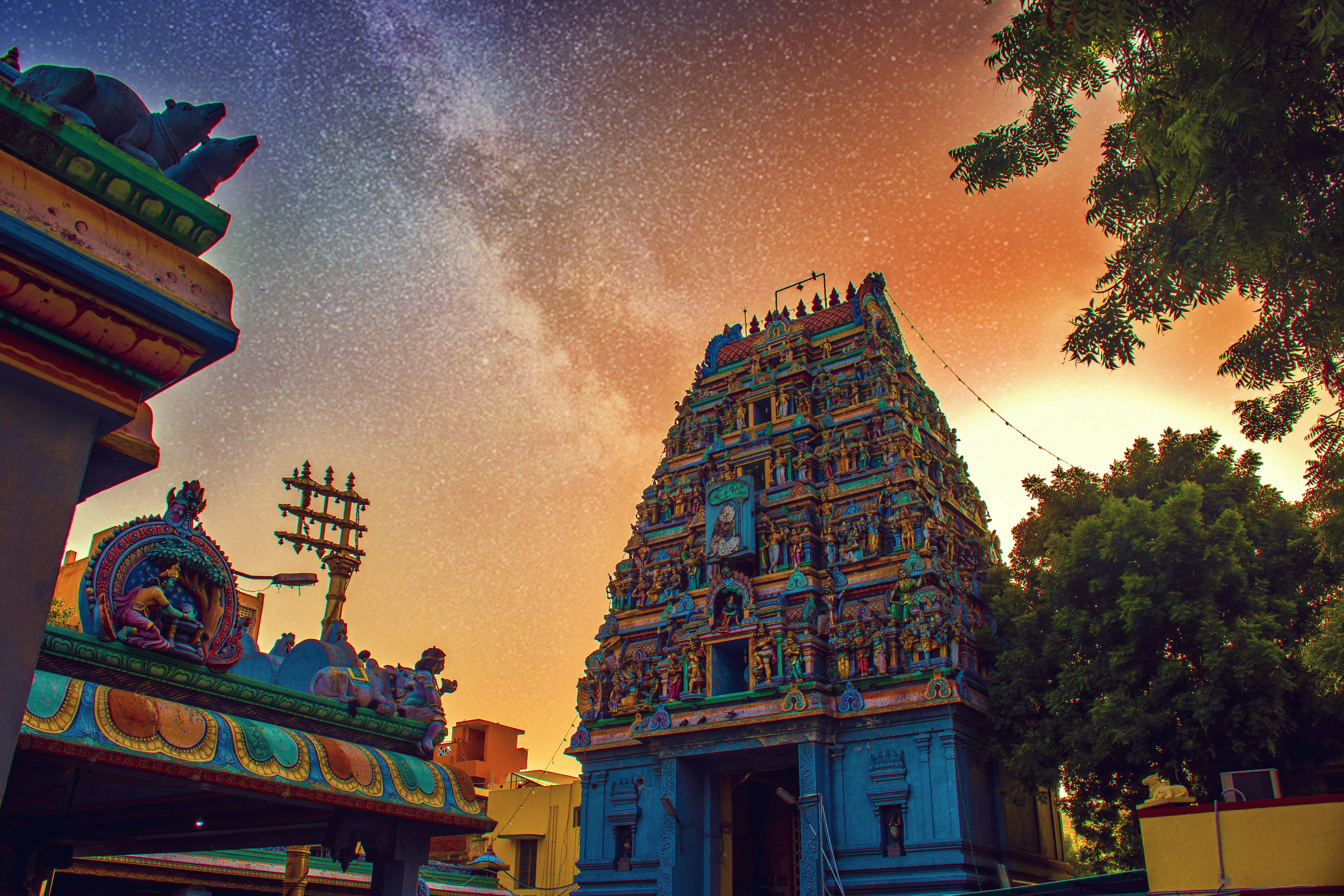
Visitors entering the complex are greeted by a separate canopy dedicated to Lord Hanuman, featuring an idol positioned in a posture of reverence towards the main sanctum. The serene inner courtyard provides a calm environment for reflection and prayer away from the bustling streets of Nashik.
History
The history of Kalaram Temple is rich with both ancient lore and modern socio-political significance. According to local traditions, during their 14-year forest exile (Vanvas), Lord Rama, Sita, and Lakshmana stayed in the Panchavati region where the temple stands today.
The current structure was commissioned around 1788 AD by Sardar Rangarao Odhekar, a Maratha noble. It is said Odhekar had a divine dream wherein he retrieved an ancient black stone idol from the Godavari River. He subsequently funded and supervised the construction of this massive black basalt temple, which took nearly 12 years and over 2,000 workers to complete at a cost of 23 lakh rupees at that time.
In modern Indian history, Kalaram Temple holds monumental importance due to the historic Kalaram Temple Satyagraha launched on March 2, 1930, by Dr. B.R. Ambedkar. This movement was a pivotal moment in the fight for civil rights and temple entry rights for Dalits in India, making the site an enduring emblem of social justice and equality.