Profile
John Doe
Explorer
3200 Points
Upcoming Trips
- 5 May - Mount Batur
- 15 May - Uluwatu Show
- 28 May - Rice Terraces
Explorer
3200 Points
Metropolitan City in Maharashtra, India
Well-connected by road networks within Maharashtra. Closest major transit hubs are located in the surrounding state region.


The Abode of Sai: A Spiritual JourneyShirdi, a small town in the Ahmednagar district of Maharashtra, India, is synonymous with the revered saint, Sai Baba. The Shri Saibaba Sansthan Temple is the epicenter of devotion, drawing millions of pilgrims annually from across the globe, irrespective of their religion or creed. Sai Baba, a spiritual master who preached 'Shraddha' (faith) and 'Saburi' (patience), lived in Shirdi for over sixty years, transforming it into a sacred pilgrimage center. His teachings of universal love, compassion, and the oneness of God continue to inspire and guide his devotees.The main temple complex houses the Samadhi Mandir, where Sai Baba's mortal remains are enshrined. The atmosphere within the temple is charged with devotion, hymns, and the chanting of 'Om Sai Ram'. Devotees queue for hours, sometimes days, for a glimpse (darshan) of the idol of Sai Baba, which radiates peace and benevolence. The daily rituals, including Kakad Aarti (morning), Madhyana Aarti (noon), Dhoop Aarti (evening), and Shej Aarti (night), are performed with great reverence and are a highlight for many visitors.Beyond the main temple, the complex includes several other significant spots:Dwarkamai Masjid: This humble mosque was Sai Baba's residence for much of his life. It's here that he performed many miracles, healed the sick, and delivered his profound teachings. The eternal flame (Dhuni) he lit still burns brightly, and devotees collect its sacred ash (Udi) as a blessing.Chavadi: On alternate nights, Sai Baba would sleep here, a short distance from Dwarkamai. It's a place of deep historical and spiritual significance, reminding devotees of his simple life.Lendi Baug: A beautiful garden tended by Sai Baba himself, where he would water plants daily. It features a perpetually burning lamp (Nanda Deep) and a neem tree under which he often rested.Gurusthan: The spot where Sai Baba was first seen as a young boy, believed by many to be the resting place of his Guru.A visit to Shirdi is not just a tour; it's a spiritual immersion, a journey to experience the divine presence and teachings of one of India's most beloved saints. The trust ensures facilities like accommodation, prasad (holy offering), and medical aid are available for pilgrims.

Randha Falls is one of the most spectacular waterfalls in the Western Ghats of Maharashtra, located in the serene hill station of Bhandardara, Ahmednagar district. Cascading from a height of approximately 170 feet (52 meters), this majestic waterfall is formed by the Pravara River as it plunges into a deep gorge, creating a mesmerizing spectacle of nature's raw power and beauty. The falls are particularly breathtaking during the monsoon season (June to September) when the Pravara River is in full spate, transforming the gentle stream into a roaring torrent. The sheer volume of water creates a misty spray that often forms rainbows, adding to the ethereal charm of the location. Visitors can witness the water thundering down, creating a dramatic white curtain against the verdant green backdrop of the surrounding hills. A short walk from the main viewing point leads to several vantage points, offering different perspectives of the falls. There's a small temple dedicated to Lord Shiva nearby, adding a spiritual touch to the natural beauty. The area around Randha Falls is ideal for nature lovers, photographers, and those seeking a peaceful retreat from city life. The lush greenery, the sound of gushing water, and the cool breeze make it a perfect spot for picnics and rejuvenation. While the monsoon offers the most dramatic views, the post-monsoon period (October-November) also presents a charming landscape with the falls still flowing gracefully and the surrounding flora at its vibrant best. The clear skies during this time allow for better photography and exploration. Close to Randha Falls, visitors can also explore other attractions like the Wilson Dam (Bhandardara Dam), Arthur Lake, and the Kalsubai Harishchandragad Wildlife Sanctuary, making it a comprehensive destination for a weekend getaway. A panoramic view of Randha Falls during monsoon.

The Sacred Sanctuary of TrimbakeshwarNestled at the foothills of the scenic Brahmagiri mountains in the Sahyadri range, Trimbakeshwar Jyotirlinga stands as one of the most significant pilgrimage sites in Hinduism. Located about 28 kilometers from Nashik, Maharashtra, this divine shrine holds a special distinction among the twelve Jyotirlingas across India. Unlike other Shiva shrines where the linga represents Shiva alone, the sacred icon here features a small cavity containing three miniature lingas, embodying the Holy Trinity: Lord Brahma (The Creator), Lord Vishnu (The Preserver), and Lord Shiva (The Destroyer).The temple atmosphere resonates with intense spiritual energy, Vedic chants, and the soothing hum of devotees performing sacred rituals. The sacred river Godavari, often referred to as the Dakshin Ganga (Ganga of the South), originates on the Brahmagiri hill overlooking this temple and flows into the nearby Kushavarta Kund—a holy water tank where millions take a ritual dip during the grand Kumbh Mela.Key Features and ArchitectureThe Unique Trimurti Linga: The extraordinary three-faced linga is adorned with an ornate jewel-studded crown believed to date back to the era of the Pandavas.Kushavarta Kund: A sacred stone tank constructed in 1750, considered the official bathing point for ascetics and pilgrims.Brahmagiri Hill Trek: A scenic ascent of around 700+ stone steps leading up to the divine origin point of the Godavari River.

The Nashik-Trimbakeshwar Kumbh Mela is a grand celestial event and one of the four major Kumbh Melas celebrated in India. Held once every 12 years when Jupiter enters the zodiac sign of Leo (Simha Rashi), this majestic festival draws millions of pilgrims, sadhus, ascetics, and tourists from across the globe to the holy twin towns of Nashik and Trimbakeshwar.During the mela, devotees take sacred dips (Shahi Snan) in the holy Godavari River. In Nashik city, the main rituals take place at Ramkund, where Lord Rama is believed to have bathed during his exile. Simultaneously, in Trimbakeshwar (located about 28 km from Nashik), the rituals center around Kushavart Kunda, the origin point of the holy River Godavari near the famous Trimbakeshwar Jyotirlinga temple.The atmosphere during Kumbh Mela is filled with chanting, incense, devotional music, and grand processions of various Akhadas (orders of Hindu ascetics). It is an unparalleled spectacle of faith, culture, and deep-rooted spirituality.
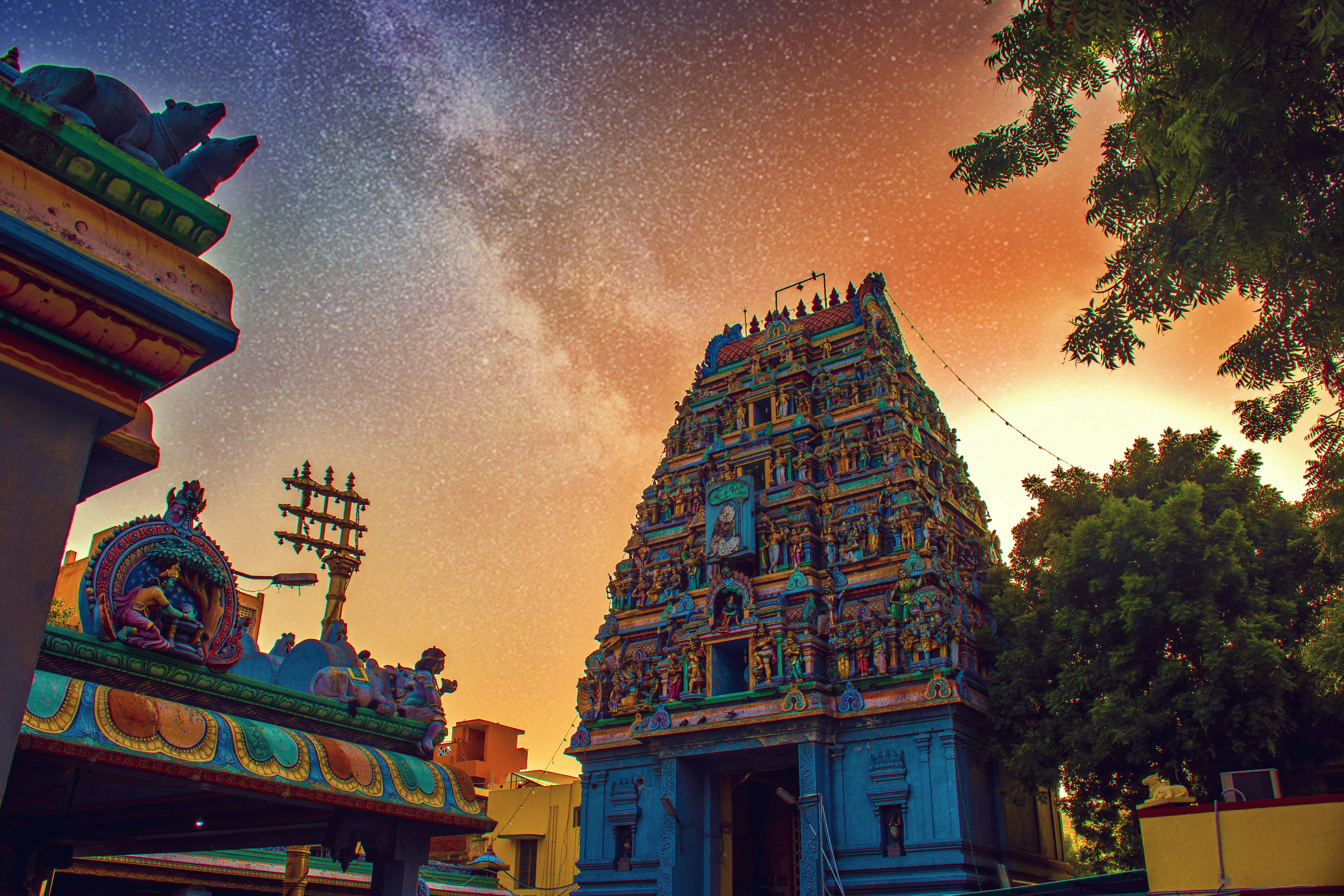
The Kalaram Temple is one of the most prominent and sacred shrines in Nashik, located in the historic Panchavati area. The name 'Kalaram' literally translates to 'Black Rama', named after the unique 2-foot-high idol of Lord Rama carved entirely from smooth black stone. Accompanied by idols of Goddess Sita and Lord Lakshmana, the sanctum offers a deeply spiritual ambiance that attracts thousands of devotees daily.Built entirely out of black basalt rock, the architectural grandeur of Kalaram Temple is breathtaking. The temple complex is surrounded by massive stone enclosure walls, housing 14 portals that represent the 14 years of Lord Rama's exile. A prominent feature of the shrine is its 82-foot-high gold-plated Kalash that shines brilliantly under the sun.Visitors entering the complex are greeted by a separate canopy dedicated to Lord Hanuman, featuring an idol positioned in a posture of reverence towards the main sanctum. The serene inner courtyard provides a calm environment for reflection and prayer away from the bustling streets of Nashik.